Adam One: The Art of Resonance
Adam One is a Slocan Valley painter and illustrator whose 2018 work Sympathetic Resonance marked his transition into painting. In this interview, he discusses intuition, his design background and the seven years he spent creating Tarot One.
In this interview
- Walk me through how Sympathetic Resonance came to be. What’s the story behind it?
- Was that something you were trying to put into the painting itself?
- What were you doing before you left the corporate world, and what led to that change?
- Your work draws on hermeticism, gnosticism, theosophy, alchemy and cosmology. How do you relate to those traditions?
- Where does intuition end in your creative process, and conscious structure begin?
- How much is meditation part of your practice?
- The physical space you arrange can help make that connection to inspiration possible, too.
- You’re opening the temple more often.
- How did Tarot One begin, and how much structure did you start with?
- How did you choose which card to work on next?
- What changes when you’re painting at a festival, around music and other people?
- How did musician portraits become part of that practice?
- Do you make those portraits entirely at the festival?
- Sympathetic Resonance is packed with detail. You’ve also talked about returning to simplicity. How do you balance those approaches?
- Is there anything else you’d like to add?
- What about the inner critic that holds people back from starting? Where does it come from?
- Everything in its place.
- The edition
Adam One, a painter and illustrator now living in the Slocan Valley, is WinPrint’s October 2026 featured artist.
Interview by Ryan, WinPrint
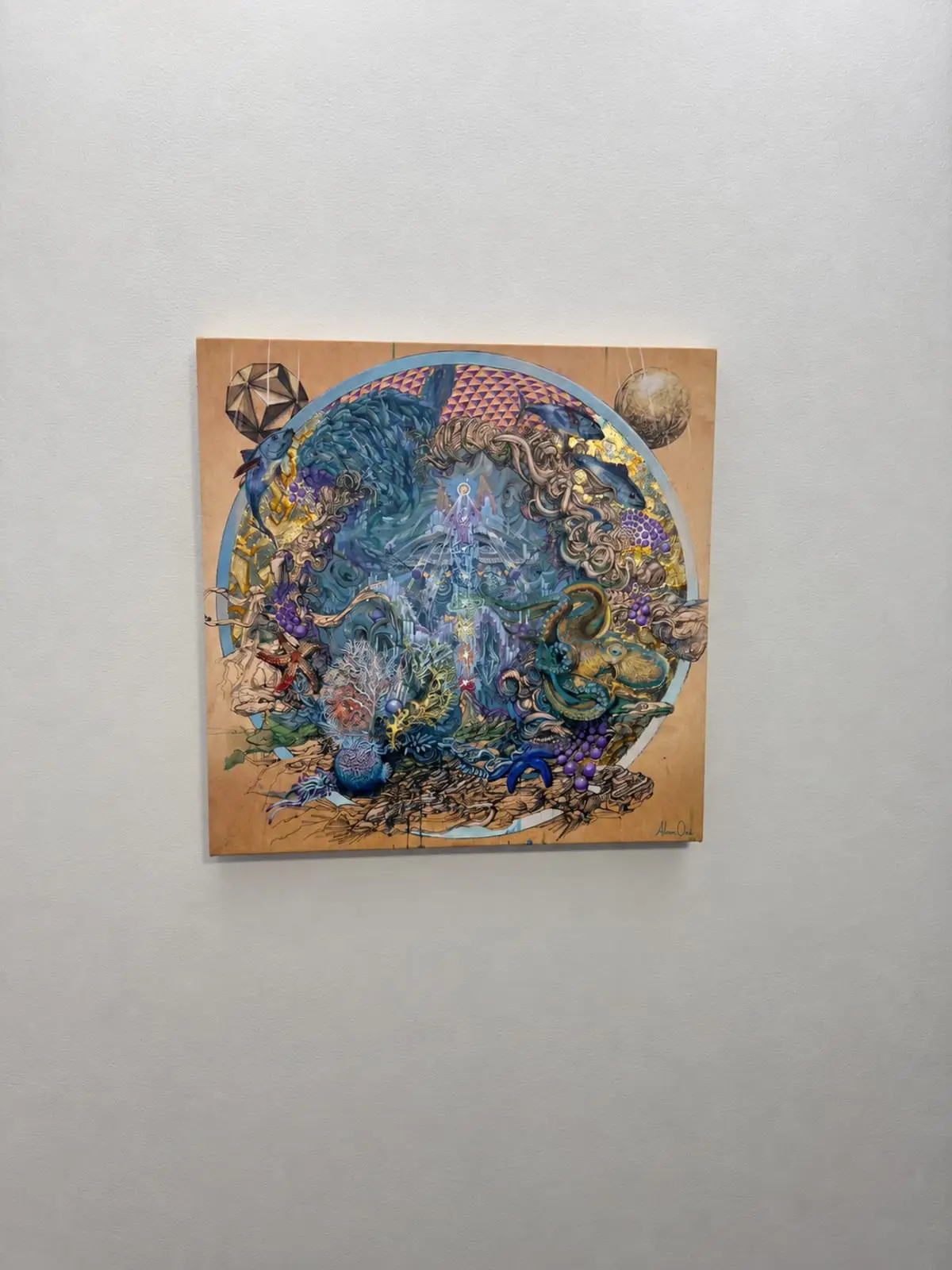
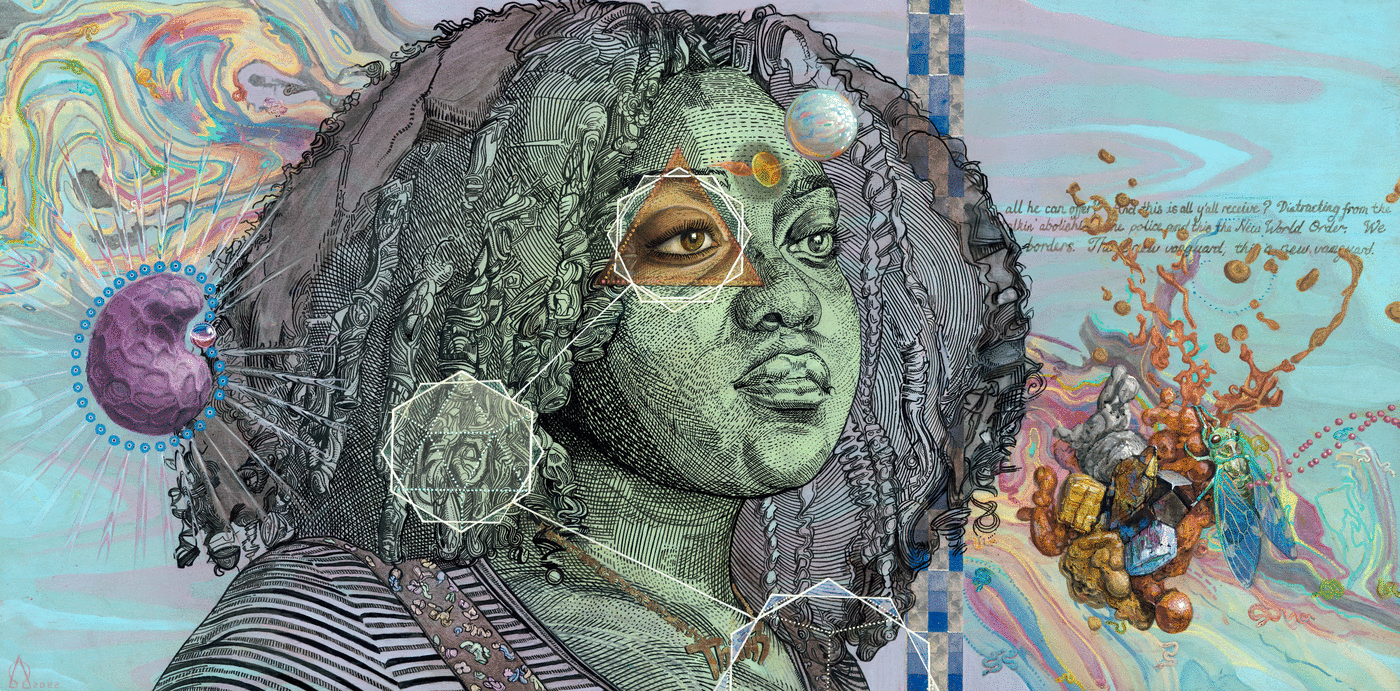
For Adam One, Sympathetic Resonance marks his transition into painting. Created in 2018, five years after he left corporate design, it followed a period devoted entirely to line work and illustration in his art career. Its imagined underwater world holds ideas that continue to run through his practice: attention, transformation and the relationship between what we put into the world and what returns.
We spoke about the work, the seven years he spent creating his tarot deck, and how painting at festivals became a bridge to the musicians whose work inspires him.
Walk me through how Sympathetic Resonance came to be. What’s the story behind it?
Adam: I wanted to create a piece that was a reflection of this idea. Sympathetic resonance is a musical term: when one note is struck, anything tuned to that note will also vibrate in the area. It’s the idea of what we put out into the world coming back to us.
I created this Atlantean underwater, energetic city that is also about the chakras—a frame for aligning your energy and being aware of what you send out, with water as a medium, and the life that comes back to you when you do. How much can come alive through that.
The centre of it all is Atlantis. But is Atlantis more of an internal state of mind and being, or is it an actual underwater space?
It was a piece on meditation, working on your nervous system and bringing to life the inner world so the outer world comes to life.
Was that something you were trying to put into the painting itself?
Adam: Yeah. It was actually the first painting I ever did. Ever since I was a kid, and through design school, I drew a ton. I rendered a lot, built 3D models and became technically intimate with my craft, but I hadn’t made an official painting.
Sympathetic Resonance is from 2018. This was five years after I left corporate design. When I first left, I was focusing entirely on line work and illustrations in my art career, and Sympathetic Resonance marked my transition into painting.
This was the moment when I decided to pick up paint and use colour—to put out there being a painter instead of just a drawer, a painter instead of an illustrator. That’s when I chose the name of my artist page, too. It was claiming what I was going to be and sending that into the world as a declaration, a manifestation.
It started the whole thing. I think it’s when I became the artist. I was making drawings before then, but it was when I came into myself.
 i
What were you doing before you left the corporate world, and what led to that change?
Adam: I went to school for industrial design—concept creation, 3D modelling, engineering for the automotive industry—at a school in Detroit. I loved the idea of working on new inventions and coming up with solutions to problems in the world.
The program was open-minded and optimistic about the possibilities of the world. That grounded out in the reality of working for big companies that were more profit-driven than innovation-driven or sustainability-driven.
You’d come up with creative ideas that were your babies, and you’d be proud of them and attached to them. The companies wouldn’t be interested in new ways of looking at things because it represented a risk to the customer base. Customers and focus groups would time and time again prefer things to look the way they had looked.
There was a lot of creative experience I’m grateful for, but it felt like the true spirit of imagining a bigger and better world was exchanged for profits and quick, assured sales.
 i
Your work draws on hermeticism, gnosticism, theosophy, alchemy and cosmology. How do you relate to those traditions?
Adam: When I was younger, I had a lot of interesting psychic, spiritual experiences that I didn’t have a way to explain. Coming into these readings was a way to understand what had been happening to me—what I was going through that the people around me told me wasn’t real.
It’s always been less of a belief system and more of an operating system. What I like is the “go and find out for yourself” aspect: don’t believe a thing until you see it.
It’s about pressing the buttons of the world around us and seeing the reactions that occur. Finding the ways we can harmoniously come closer to our dreams and pursuits.
I’ve always been interested in the spirit and the sacred, but wildly resistant to religion and dogmatic thinking.
 i
Where does intuition end in your creative process, and conscious structure begin?
Adam: It is a balance. If you know the entire map, why would you explore the grounds you’re on? But to go without any understanding undermines tradition, practice and knowledge we’ve handed down for thousands of years.
First and foremost, it’s about developing a strong understanding of your craft. True intuitive thinking is available once you’ve internalized and embodied a system so much that it becomes thoughtless for you, like walking.
I believe in big periods of apprenticeship, practice, learning, structure and repetition. Through that is when we can begin to let go.
When you see athletes in flow states, gliding effortlessly down a mountain, it’s only because of the practice and time they put in that they can reach those effortless-looking states.
To invoke the intuition, first you sort of need to set it aside.
 i
How much is meditation part of your practice?
Adam: There was a time when I meditated regularly, and that was beautiful. A meditative practice is essential, but I don’t think it needs to be meditation.
I love long walks with my dogs, or other people’s dogs, being in nature, jumping in the rivers and thinking about my breath. What’s a down-regulating activity that slows us down and brings us into the moment, away from the flashy lights and influences of the internet?
We need systems that calm the nervous system so drawing in a sketchbook can bring joy in comparison to this super rainbow prismatic lollipop of dopamine we have in our hands.
I unplug the internet during the day when I work. It’s the greatest thing. I feel like that’s a meditation at this point in life.
The physical space you arrange can help make that connection to inspiration possible, too.
Adam: Personally, I think the most important thing is to be the temple, to be the conduit, to work on your antenna. Worry less about receiving the transmission than about creating the proper space for a transmission to be received.
As its own separate spirit of inspiration, it chooses when it comes to me. My job is to give it more opportunities because I’m sitting down more often, creating more often.
You’re opening the temple more often.
Adam: Exactly. The fire is lit. I’m here. “If you don’t want to join me tonight, that’s fine, but I’m going to be here anyway, so you might as well join me.”
A seduction of intuition, a seduction of inspiration, rather than forcing it or chasing after it. You’ve got to play it cool. Be there. Be creating. Have the tools moving. Have the supplies out.
How did Tarot One begin, and how much structure did you start with?
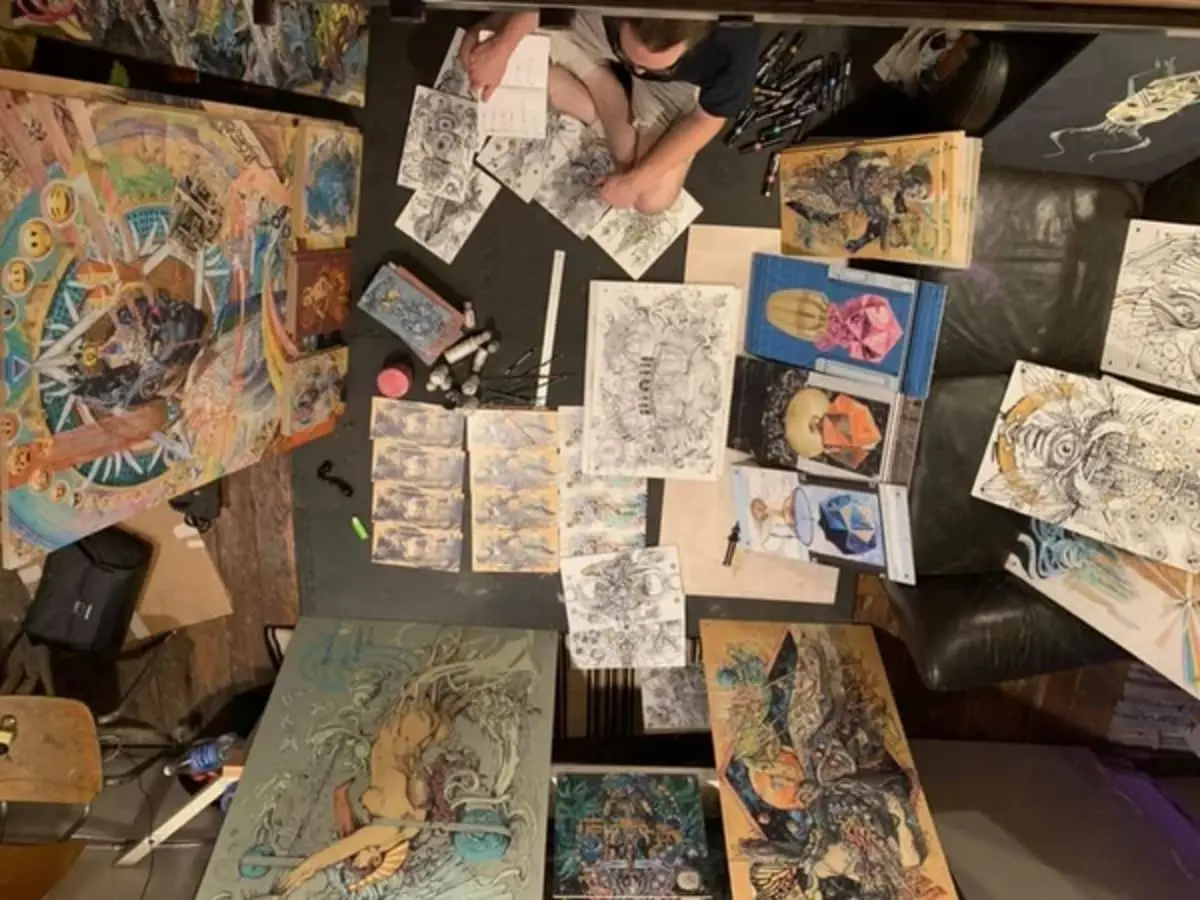
Adam: I was offered free classes on tarot and astrology by someone who owned an esoteric, occult library in Seattle. He taught me and a group of six others every week. I wanted to create a tarot deck to help memorize what I was learning.
Those classes ended after about a year. The deck took about seven years because it wasn’t so structured. Whenever I had space and time, I’d return to it between bigger pieces and gallery shows, especially while travelling.
The entire deck was made in a single sketchbook. I scanned the sketches, gave them a little tone and added gold highlights and inlays. I didn’t change them too much.
Had I known how much work and structure it would take, I never would have started, honestly. Halfway through I was like, “Man, I’m in deep, and I actually have to finish this thing now.” There was a bit of ignorance I’m grateful for that allowed me to get through it.
How did you choose which card to work on next?
Adam: Completely at random. Often the card I was working on would be the lesson I was in, in life. It felt like it picked itself.
Sometimes it took two weeks to finish a card because it took two weeks to get a grip on the situation of my life. Others moved easily because it was a concept I understood and was connected to already. It felt like method acting.
It really is the biggest thing I’ve ever done. It made it easier because it was lots of small things, but also one big piece of art. You got the bite-sized reactions of completing a page or card. It wasn’t one giant painting that wasn’t finished until seven years.
 i
What changes when you’re painting at a festival, around music and other people?
Adam: As long as you can get over the nerves of being witnessed, it offers a completely different way of creating. The music can move your body and brush, give you feelings and emotions to work with.
People have ideas about what you’re creating. You can catch reflections in the lyrics or in what somebody says they see in your piece that you didn’t see it as. There’s a huge opportunity to create differently, as long as you’re willing to open up the control of your process.
There’s another flow state where people are watching with the expectation that you’re painting. At home, you might stare at it for an hour and not know what to do. If three people are behind you watching, it’s more like, “Okay, put paint on the brush and move.” It helps me keep moving and make decisions faster.
It’s precious to get us out of the studio and for others to become more connected with the process than just the end result.
How did musician portraits become part of that practice?
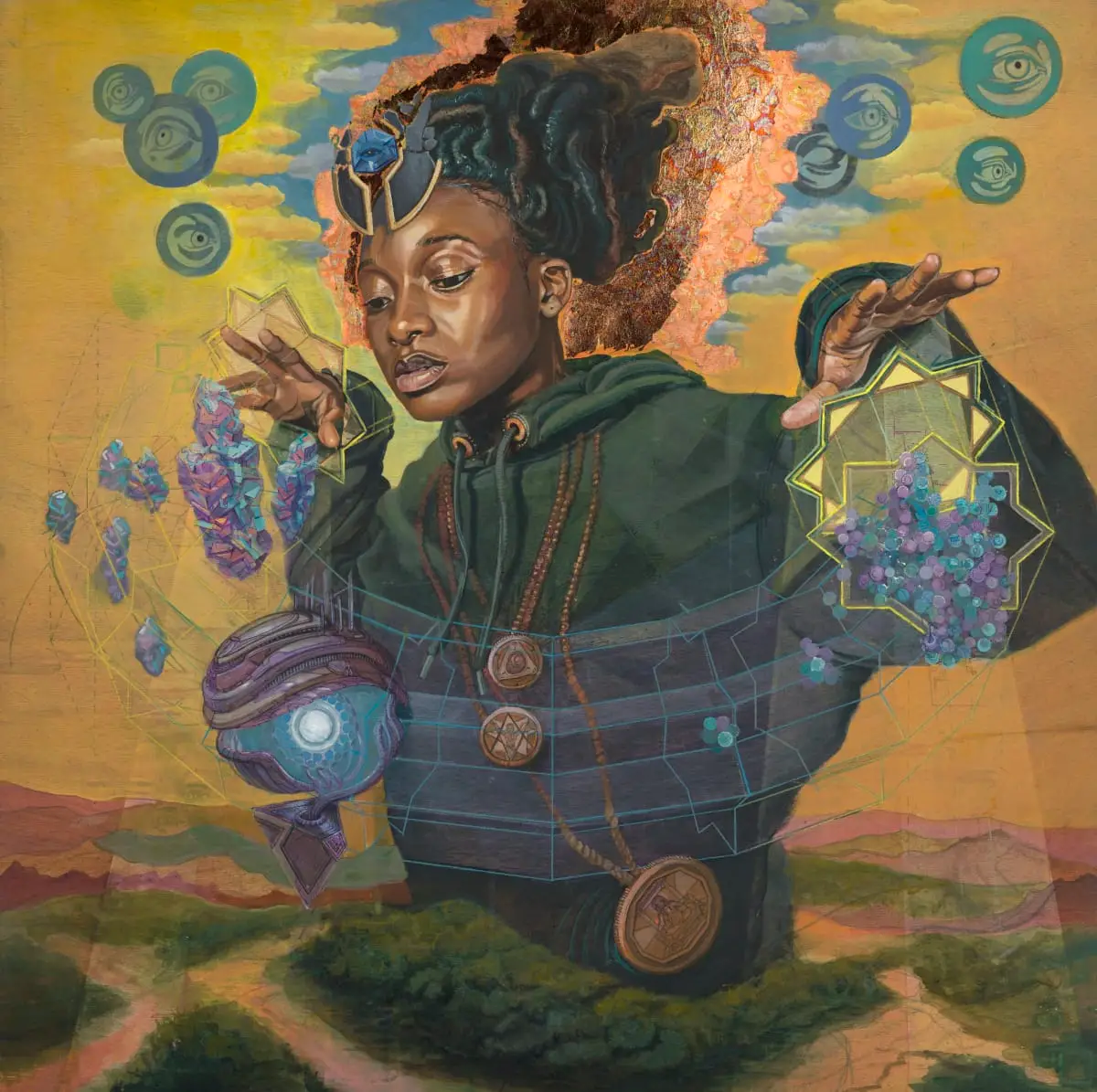
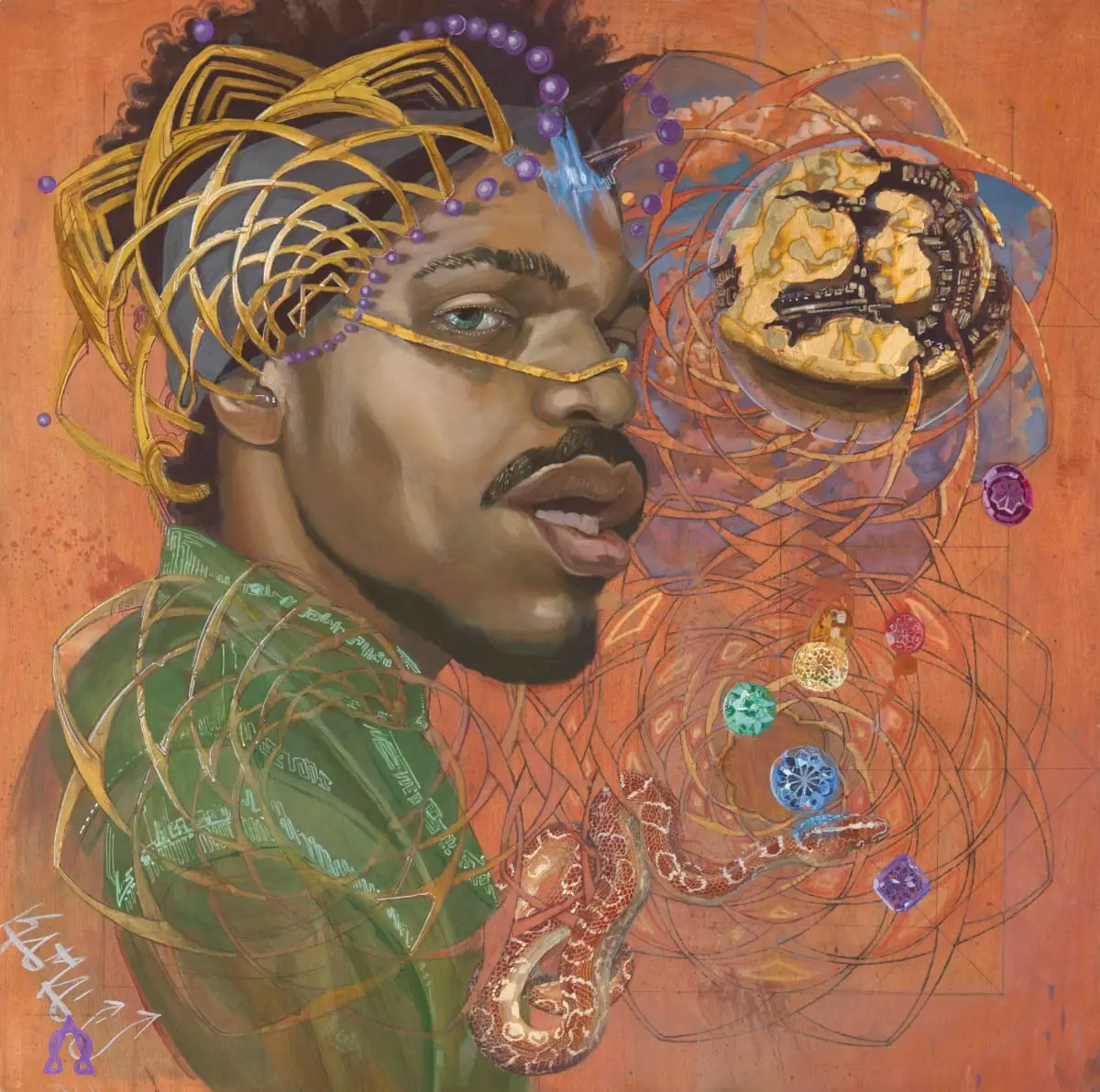
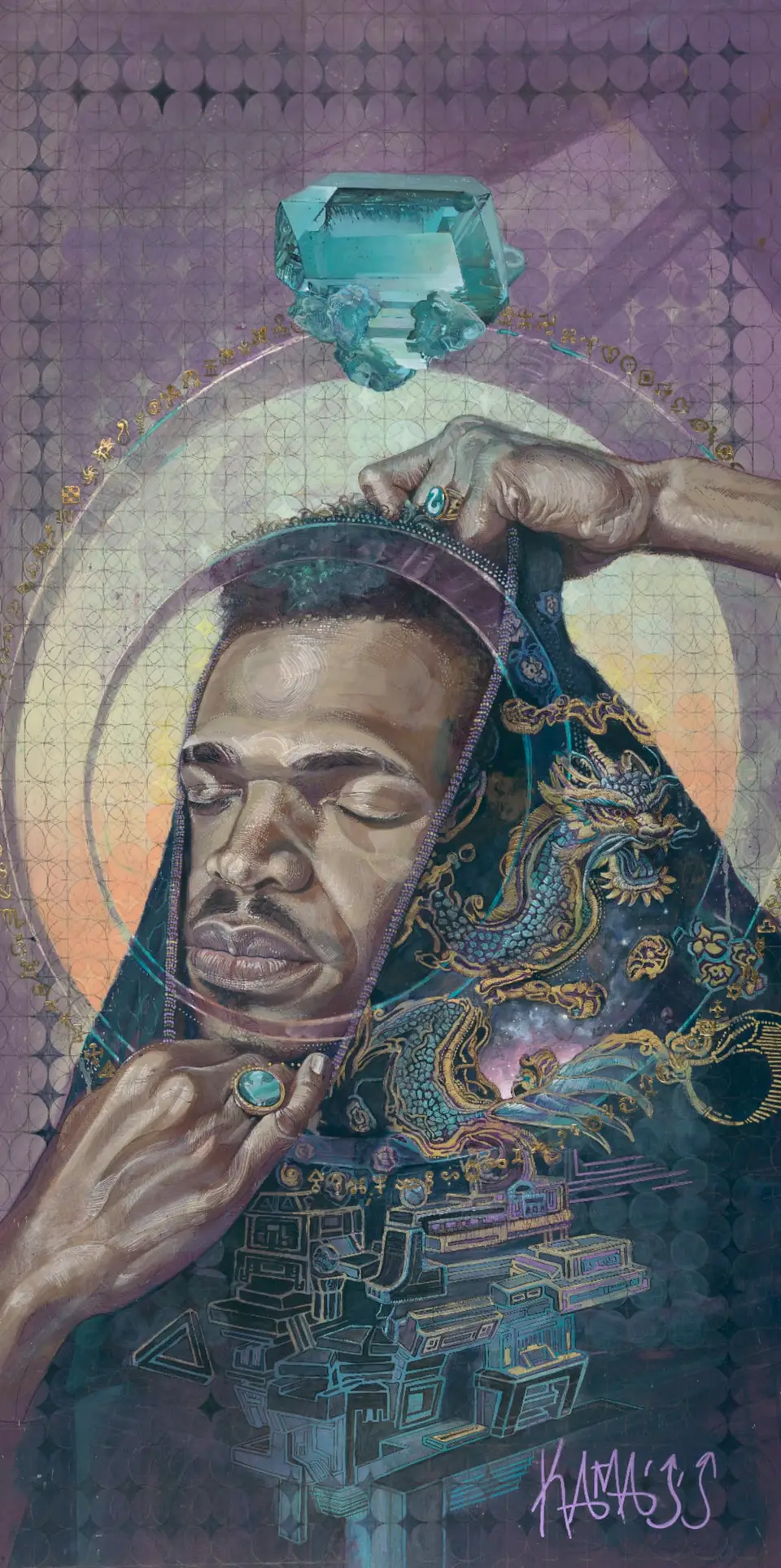
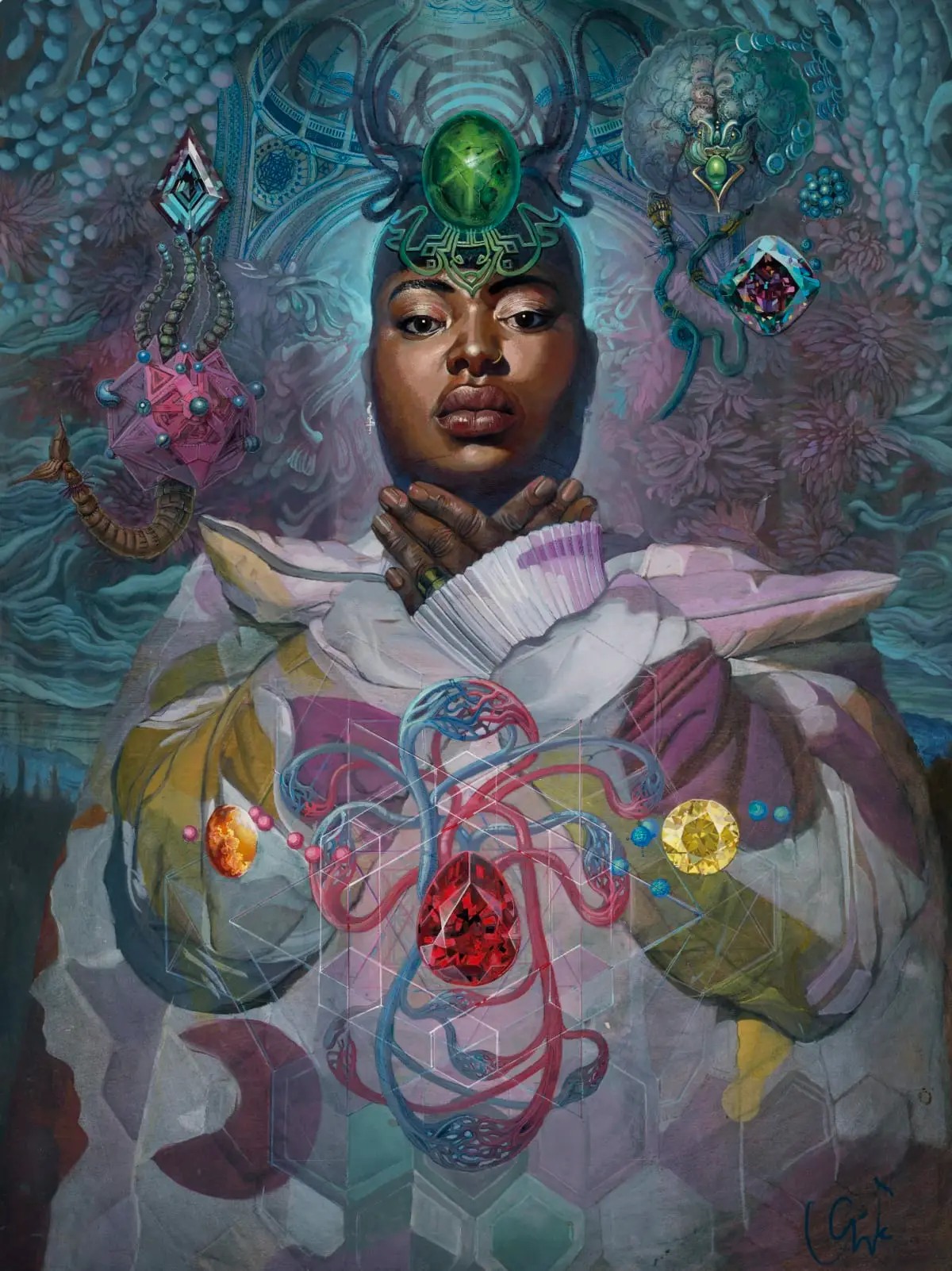
Adam: For a long time, I painted friends, people around me and photos of random people. I started wanting more professionally dressed, stylish subjects. The musicians at festivals were like characters in costumes—intentional, photogenic, with lots of professional photographs.
I painted people playing at the festival where I was painting. There was a common appreciation for the subject matter. It felt like tapping into the culture and adding to it.
Almost every person I’ve painted, I’ve met before or after their sets. They sign the paintings, and we’ve stayed connected. I’ve done album art. Some have bought the paintings. It became a community-building exercise—a bridge. I was representing these people with the hopes of getting to know them.
Hearing from people whose work I love that they love my work is a whole other level of validation.
If I wasn’t painting these people, I’d still be listening to their music while painting something else. They’re in the room either way. What if I closed the circle—received inspiration from them and poured it back towards them as a way of saying thank you?
 i
Do you make those portraits entirely at the festival?
Adam: I start beforehand and have the piece pretty well developed, so it’s at an exciting phase for people to see and the musicians can understand how far it’s going to go.
It takes me a few days to draw a good person. I get the technical stuff out of the way and then move into flourishes, magic detail and energetics.
 i
 i
Sympathetic Resonance is packed with detail. You’ve also talked about returning to simplicity. How do you balance those approaches?
Adam: I had to question whether the details were just to say I did it, or whether they were necessary parts of the narrative. Is it technically correct, or does it look good because there’s so much obvious work?
Now I’m trying to move back to being technically correct as much as possible, which requires drawing simple or singular objects. Then allowing details to be less decorative and more narrative.
There’s a lot of narrative in this piece, but also flow-state line work and freestyling hours where I got into swirls and movements. The octopus speaks to that, being a shapeshifter, all these textures and colours: what are you going to put out there? What are you going to be?
Is there anything else you’d like to add?
Adam: With creativity, the most important thing is to be creating. My philosophy is the doing of a thing.
There’s this idea you have to know what you’re doing and have the answers. Creativity is a place where you can be wrong. It doesn’t mean anything about you.
We can discover exciting things about ourselves by facing the mirror of a canvas or blank page and seeing what comes out. Be creative with whatever tools are available. Don’t think there’s a right or wrong way.
You can learn proper techniques, but art is something we do, like dancing. You can get better by taking classes, but you can dance at home no matter what because it’s within you.
What about the inner critic that holds people back from starting? Where does it come from?
Adam: I would say it’s our friend. Something cares about us, believes in us, wants us to do better and learn.
It’s important to let it exist, not fight it or try to get rid of it. I think it’s a source of power, but we interpret it incorrectly and let it scare us. I feel like it’s a call to learn.
We also need to be kind to ourselves where we’re at on the path of reaching more. I wouldn’t ask for the critic to go away, because I feel like that would be when we stop learning and growing. We need to live with it without letting it stop us doing what our heart wants to do.
Everything in its place.
Adam: Everything in its place, for sure. It’s not the master, but it is a great guide.
The edition
Sympathetic Resonance (2018) by Adam One is the October 2026 WinPrint Artist Series edition: five 20 × 20 inch canvases, printed and hand-stretched over cedar bars in Winlaw, BC, and embellished, signed and numbered by Adam. Editions 1/5 to 4/5 are $250 CAD each. Edition 5/5 is the prize in the free October draw, which closed October 22, 2026 at 11:59 p.m. Pacific. The edition is never reprinted.
Questions about Adam One
Who is Adam One?
Adam One is a painter and illustrator living in the Slocan Valley, and WinPrint’s October 2026 featured artist.
When did Adam One paint Sympathetic Resonance?
Adam One created Sympathetic Resonance in 2018, five years after leaving corporate design. He describes it as his transition from linework and illustration into painting.
Where can I buy Adam One’s Tarot One deck?
Tarot One is available through Adam One’s Symprez store. The deck teaser in this interview links to the product page.
Find the artist
Adam One’s website · @symprez on Instagram · Adam One’s WinPrint artist profile
Explore the current Artist Series
WinPrint’s Artist Series produces signed, numbered canvas editions of five. One canvas from each edition is offered through a free public draw.
See the current drawExplore this artist’s collection