Aaron Brown: Tattoos, Painting & Breathe
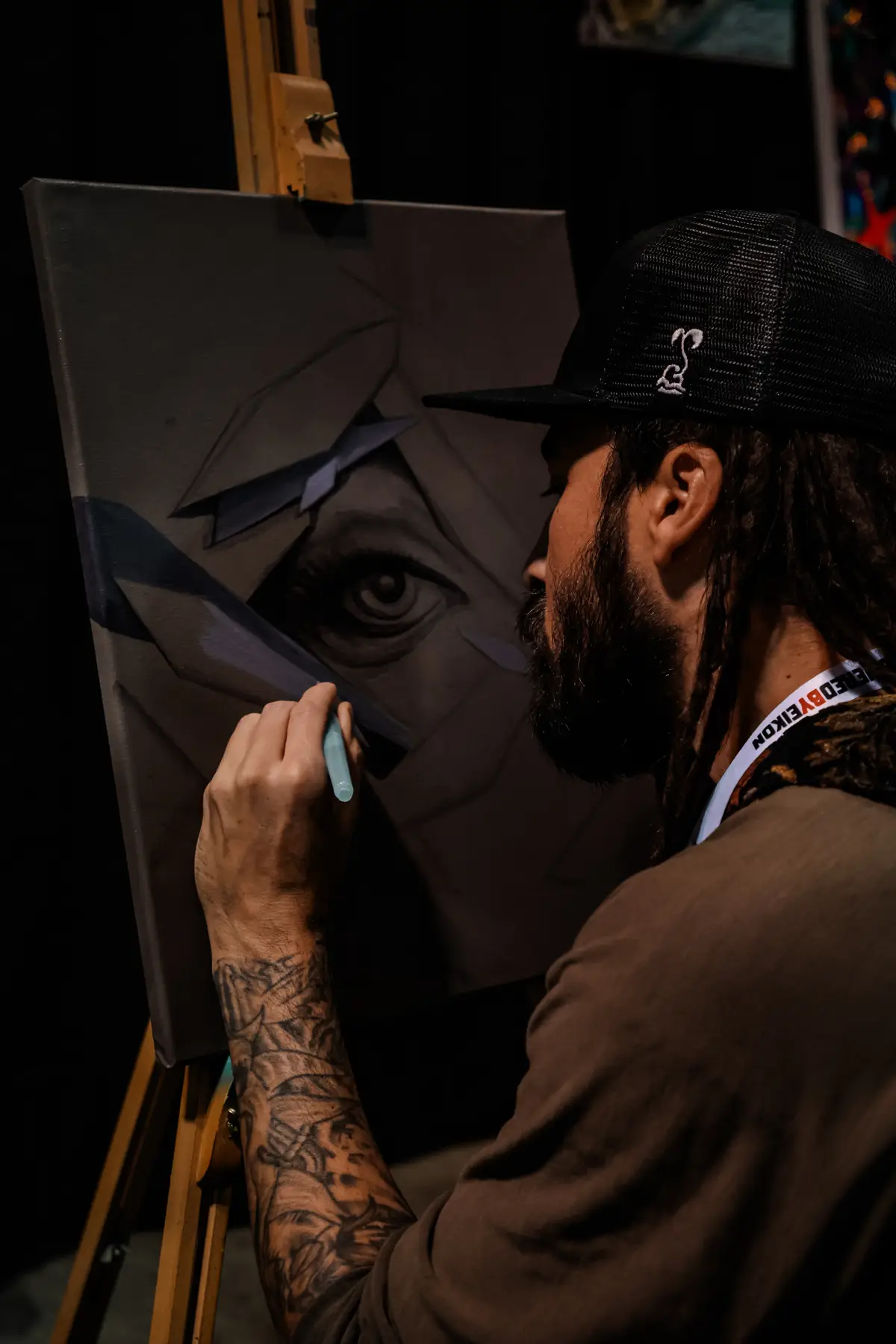
Aaron Brown is an artist working across tattooing, painting, digital art and public installations. His WinPrint edition Breathe combines a digital composition with hand-painted white highlights on each canvas.
In this interview
- How did Aaron Brown become a tattoo artist?
- How does Aaron Brown describe his tattoo style?
- How does Aaron Brown use digital tools in his art?
- What does Aaron Brown create beyond tattoos?
- What is Aaron Brown’s SOAR installation?
- What is Aaron Brown working on next?
- Breathe — five numbered canvases
- Find Aaron Brown
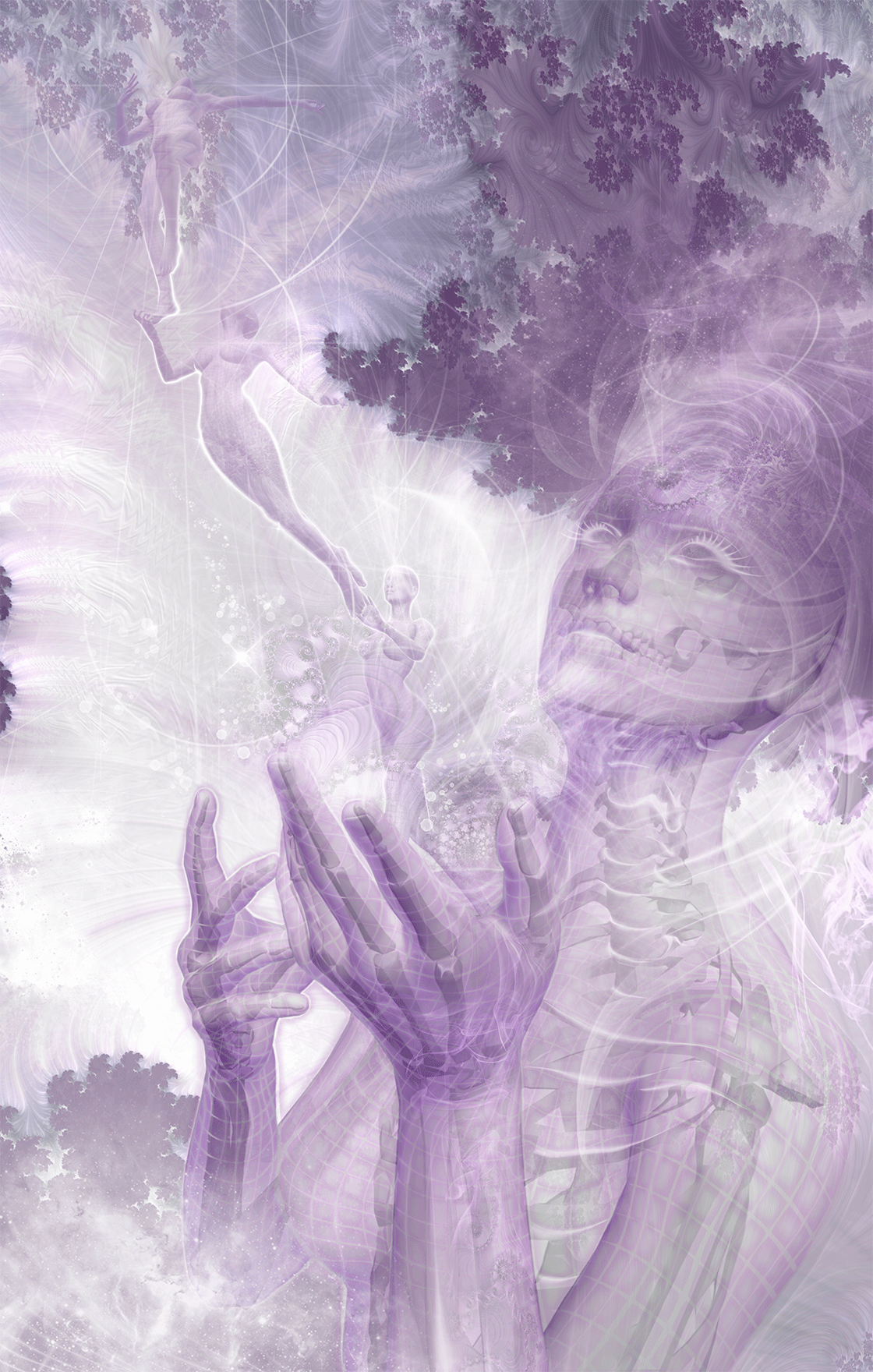
The WinPrint Monthly Artist Series is proud to showcase Aaron Brown with his piece Breathe. He built the composition digitally, layering skeletal forms, fractal textures, and translucent figures into something that feels like looking through tissue and light at the same time. But the prints aren't just output — each of the five gets hand-finished by Brown with painted white highlights, so no two are identical. That bridge between the digital build and the physical mark is where the work actually lives, and it's a good window into how Brown operates across tattooing, painting, and image-making more broadly.
How did Aaron Brown become a tattoo artist?
Aaron Brown's path into tattooing did not begin in a neat or formal way. It started when he was invited to show a piece at an art event at New World Samurai in Canmore. At the time he was working as a line cook, not expecting much beyond the chance to hang his work. When the piece sold, it opened a door into the local tattoo scene.
After time spent around the shop — watching and learning — Brown's interest in tattooing grew. But his first tattoo happened elsewhere: in a friend's basement, before any formal apprenticeship. He warned his friend he did not know what he was doing. His friend insisted. Hours later, after struggling through a complicated abstract design and overworking the skin, Brown looked at the result and knew immediately it was not good enough.
That moment became less a beginning than a line in the sand.
Soon after, Brown showed a photo of that first tattoo to Don, the artist who would later become an important early mentor. Don's reaction was minimal. He looked at the photo and simply said, "Oh." Brown has said that response hit harder than open criticism would have. It forced a more serious question: who was he trying to be, and what kind of artist did he actually want to become?
Instead of continuing down the basement-tattoo route, he stopped. Nearly two years passed before he tattooed anyone again. In that gap, Brown made a decision that still defines the way he talks about his work now: if he was going to take tattooing seriously, he had to do it the right way.
That seriousness became the foundation of his career.
How does Aaron Brown describe his tattoo style?
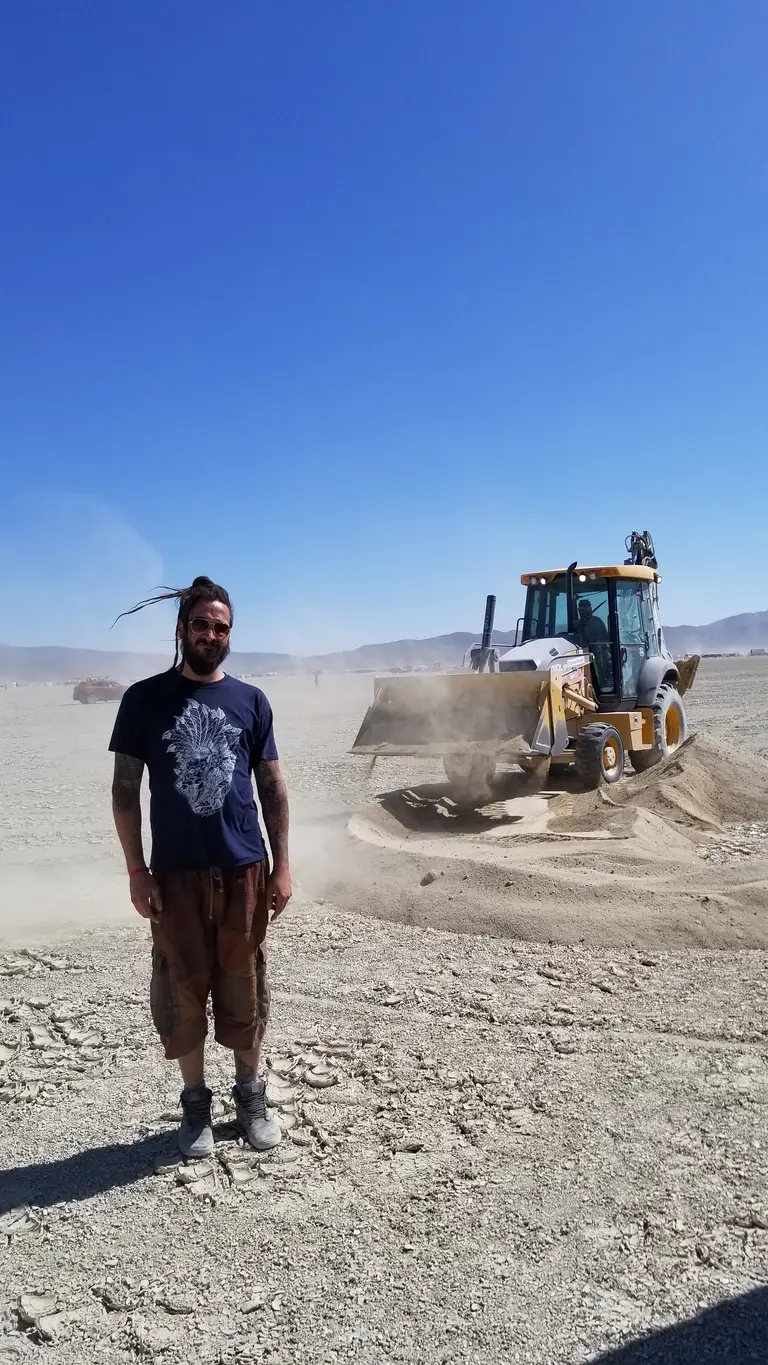
Brown's development as a tattoo artist was shaped by a traditional understanding of craft, but not by rigid imitation. Early on, he worked in the Canmore shop where three artists with very different sensibilities influenced the environment around him. One leaned heavily into Japanese and neo-Japanese work. Another pushed into blackwork and geometric directions. Another brought an illustrative sensibility and a level of versatility that made almost anything seem possible. Brown absorbed all of it, but he did not want to come out the other side looking like a copy of the people around him.
That tension still sits at the center of how he describes his style. The simplest version, he says, is illustrative neo-traditional. The foundation matters to him: strong linework, solid color, readable composition, and the kind of structure that allows a tattoo to age well. That is what keeps the work grounded. But inside that framework, he looks for room to push. He adds geometric elements, seeks out more dynamic visual movement, and tries to make the work feel distinct without losing long-term durability.
For Brown, traditional tattooing is valuable precisely because it is such a firm base. Heavy lines, simple patterns, clear shapes and dependable structure are not limitations in his mind. They are the starting point that lets an artist branch into more personal territory. The real challenge is not making something striking for a photograph. It is making something that still works years later.
That belief shapes more than his aesthetic. It also affects how he gathers influence. Brown has said that while he is drawn to classic tattoo imagery like skulls, snakes, roses, and lady heads, he tries not to pull inspiration primarily from other tattooers. Instead, he looks at source material, other art forms, painters, and visual languages outside tattooing. He is interested in understanding what makes an image effective, then carrying that quality into something new. He is much less interested in reproducing what is already circulating as trend.
How does Aaron Brown use digital tools in his art?
That distinction becomes even sharper when he talks about AI and digital tools.
Brown is not a purist in the simplistic sense. He uses digital tools in his design process and has for years. Long before AI flooded creative platforms, he was already using Photoshop and later an iPad to build, test, and evolve visual ideas. He speaks about digital work as a legitimate medium, not a shortcut. One idea that stayed with him came from a digital artist who described traditional painting as working by subtracting from white light, while digital art creates directly with light. Brown found that framing useful. It gave digital image-making its own logic rather than treating it as a lesser copy of physical media.
That shift opened things up for him. Digital work became a place to experiment, to push beyond what he might try immediately in a traditional format, and to develop images that could later feed back into tattooing, painting, and print.
At the same time, he is openly skeptical about the current creative environment surrounding AI. He sees it as a powerful tool and admits that it can be useful for references, especially now that so much online image search is already saturated with generated content. But he is wary of the scale, the speed, and the erosion of discernment that comes with it. He has pointed to the moral ambiguity surrounding how these systems emerged, and he is especially critical of how easily they encourage imitation without understanding.
The real work lies in identifying why something works, what specifically attracts you to it, and then applying that understanding in a different context. That is where voice begins.
For Brown, the issue is not whether artists ever use references. The issue is whether they know how to transform what they are seeing. He draws a hard line between extracting what is compelling from an image and simply copying it. Without that process, what gets called "style" can sometimes be little more than undeveloped habit.
That concern connects to a broader frustration he has with flattening creative culture in general. In his telling, too many people chase the appearance of originality without going through the slower, more demanding process of actually building it. The result is a kind of surface-level remix culture where people aim for the end state of authorship without the deeper pleasure of discovery. Brown does not reject remixing entirely. He simply sees it as a different activity from making something that genuinely feels like your own.
What does Aaron Brown create beyond tattoos?
That commitment to process helps explain why his work has continued to branch outward beyond tattooing.
Over the years, Brown has moved between tattooing, murals, digital artwork, public installations, and more recently renewed attention to painting. He spent roughly fifteen years at New World Samurai, a rare length of time in one shop, and still describes that place as family. After that he spent time at Cryptic Hive in Fernie, where he credits the experience of working alongside Liam Monahan for helping him level up through care, observation, and a deeper attentiveness to both process and client experience. He now works out of Studio Phi, where the environment is more independent and self-directed, with most of his work coming through his own client base.
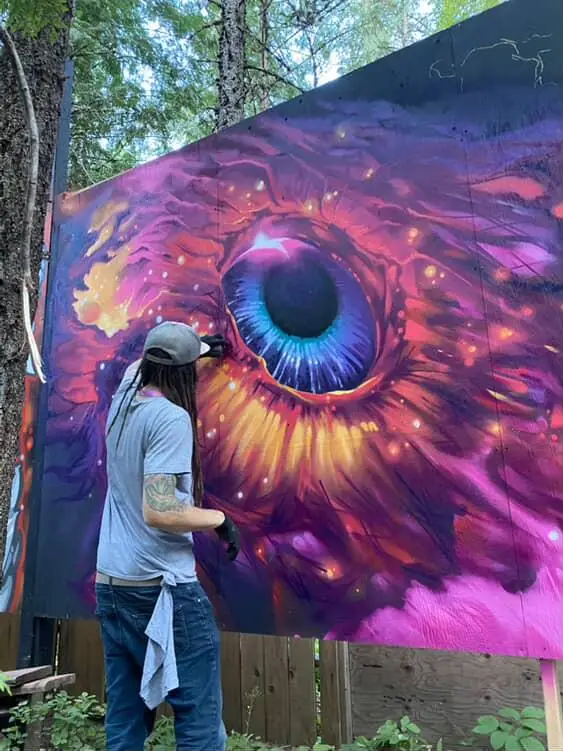
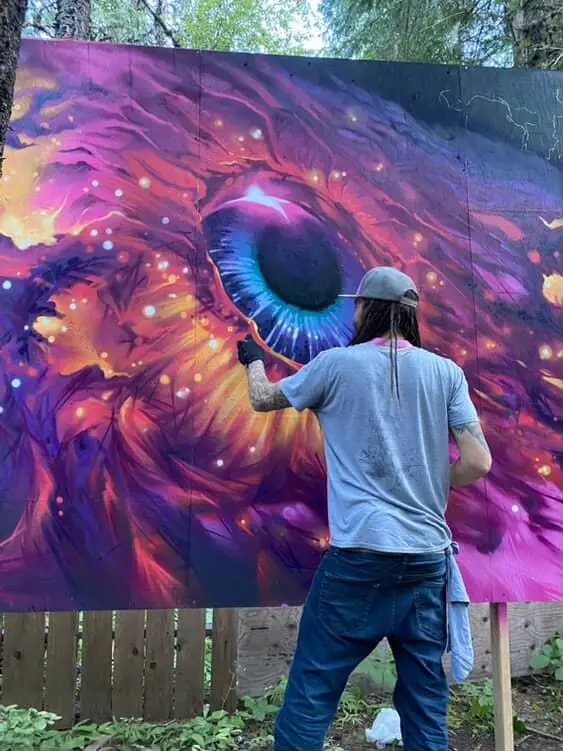
Even as tattooing remains central, Brown has become increasingly interested in what happens when digital image-making becomes physical again.
In the last couple of years he has been exploring canvas prints more seriously. Paper prints never felt quite sufficient for what he wanted the work to communicate. Canvas gives the image more presence, more object quality, and more opportunity for intervention. He is interested in hybrid approaches: embellished prints, mixed-media finishes, partially completed works that branch into unique hand-finished outcomes, and methods that preserve some scalability without losing individuality. The appeal is not just technical. It is philosophical. He is looking for formats that go beyond reproduction and one-off creation, where each piece can still carry evidence of a human hand.
That concern with physical presence has also pulled him back toward painting. Brown has described noticing, at a tattoo convention, that a live painting in progress was drawing more interest and stronger reactions than a table full of highly polished digital prints representing hundreds of hours of work. The difference, he sensed, was not necessarily about quality. It was about contact. People responded to something that felt visibly made. In an environment increasingly filled with refined, frictionless imagery, the trace of the human process matters more.
What is Aaron Brown’s SOAR installation?
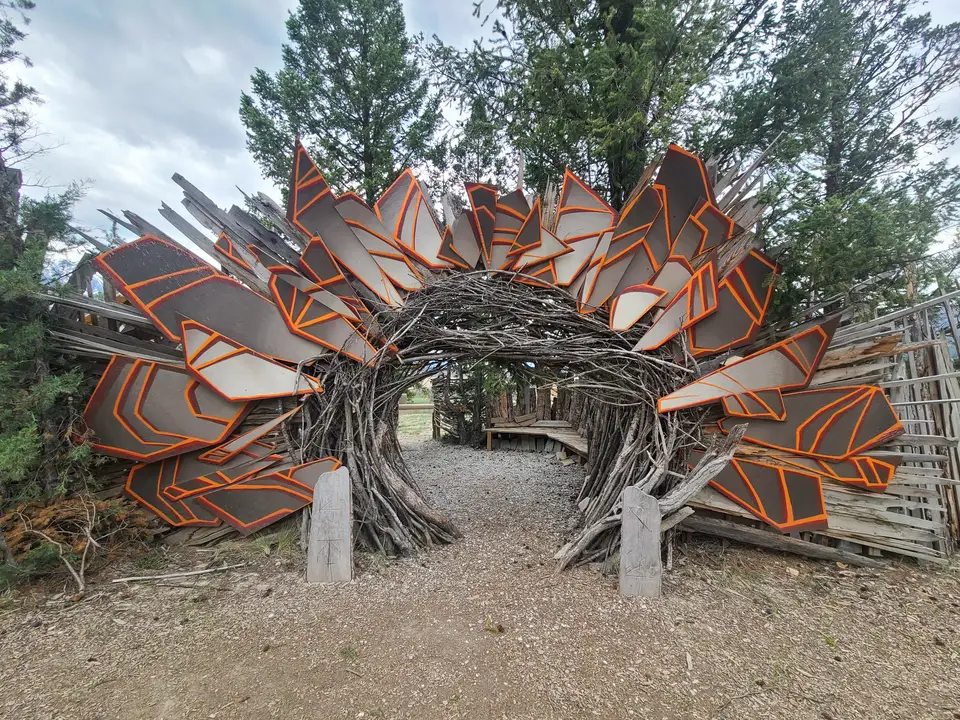
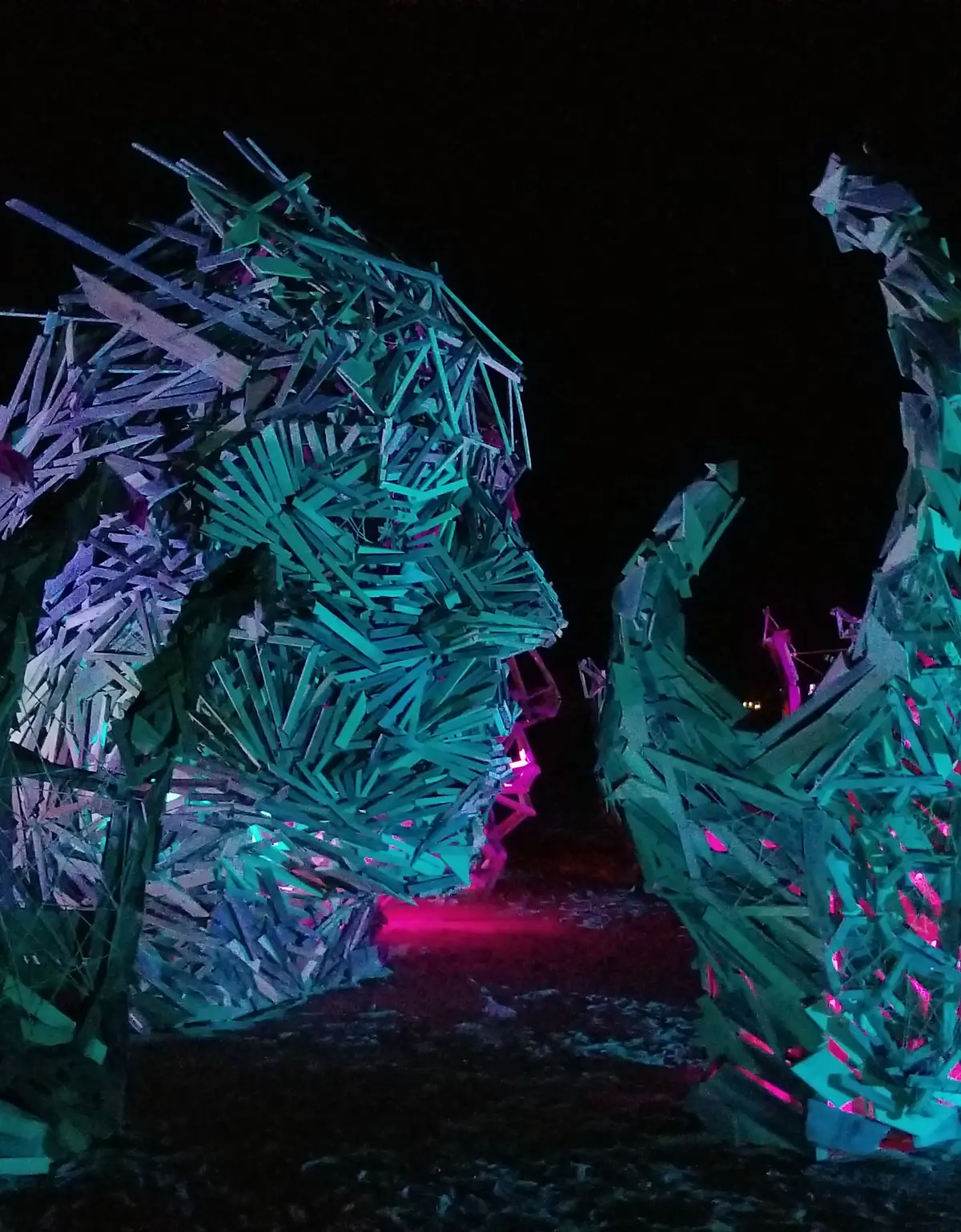
That same instinct is visible in one of his public art projects, SOAR, an installation created for Calgary's East Village. The work came out of an artist call for a patio-based art walk called Art-ios. Brown submitted examples of earlier installation and mural work, was selected, and then developed a site-specific concept for a pergola above the patio at Charbar in the Simmons Building. While scouting the location, he learned that a goose had returned to the rooftop year after year to lay its eggs there. That image of a large bird watching protectively from above became the conceptual seed for the final installation: a giant bird perched overhead, looking down on the people below.
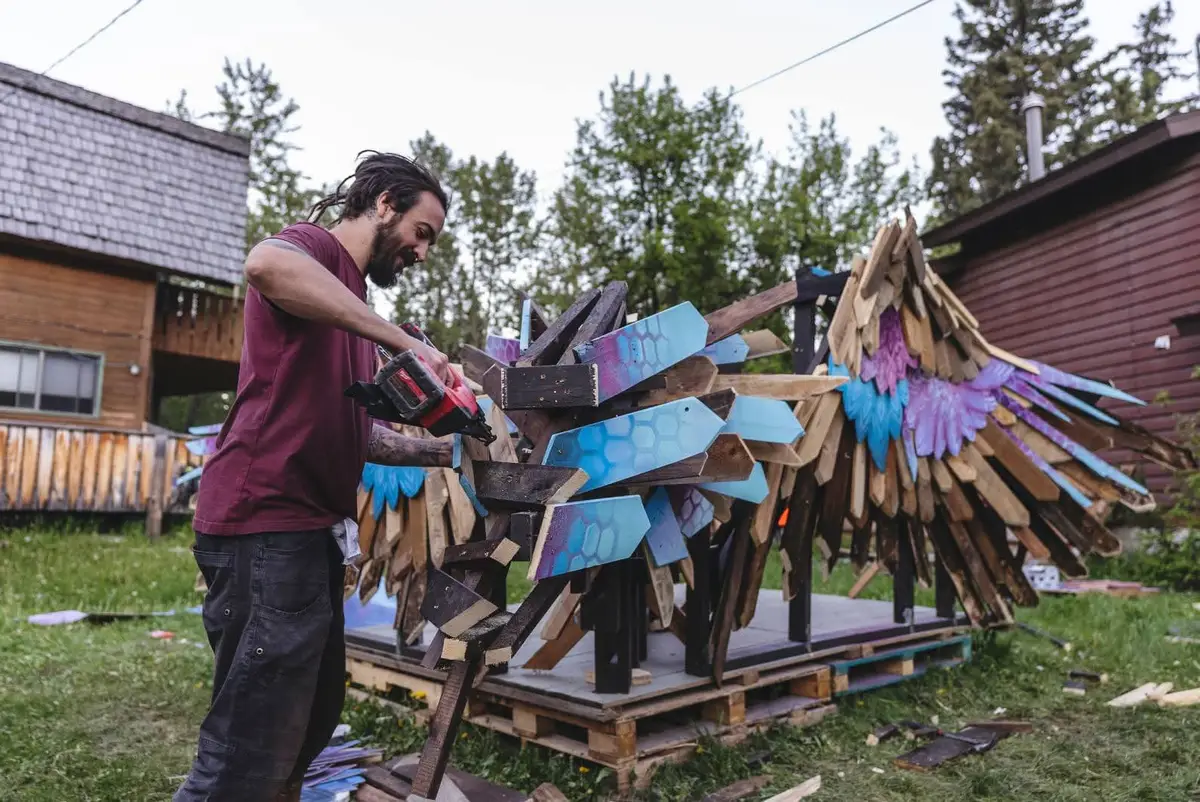
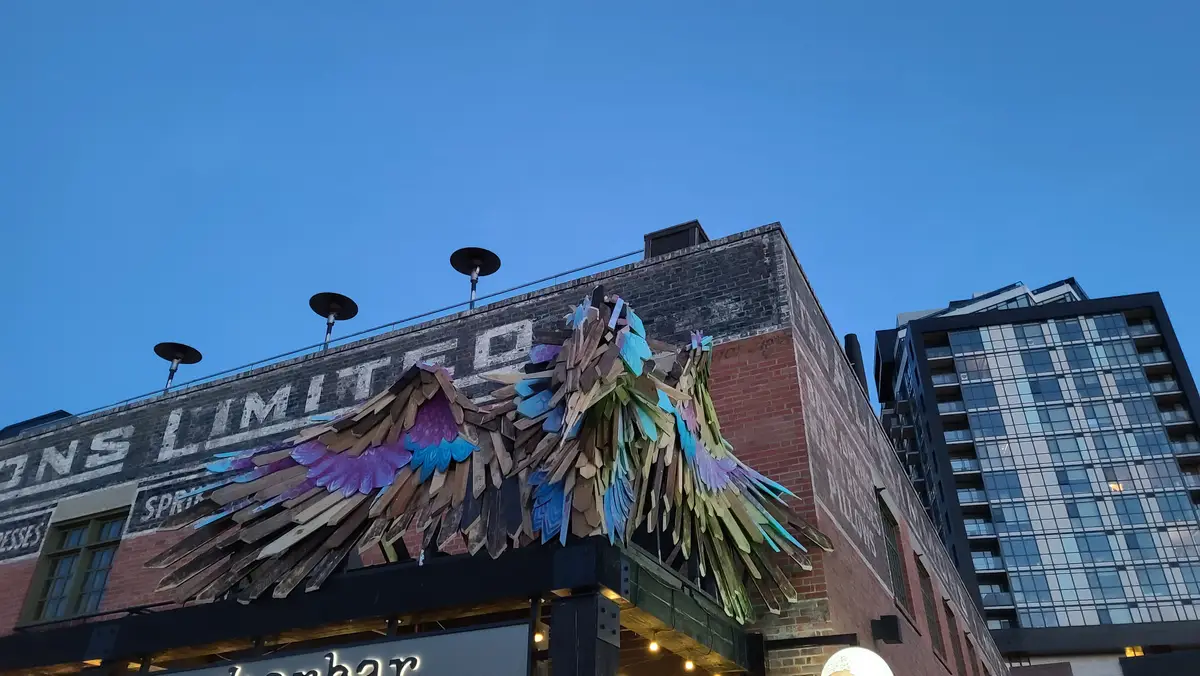
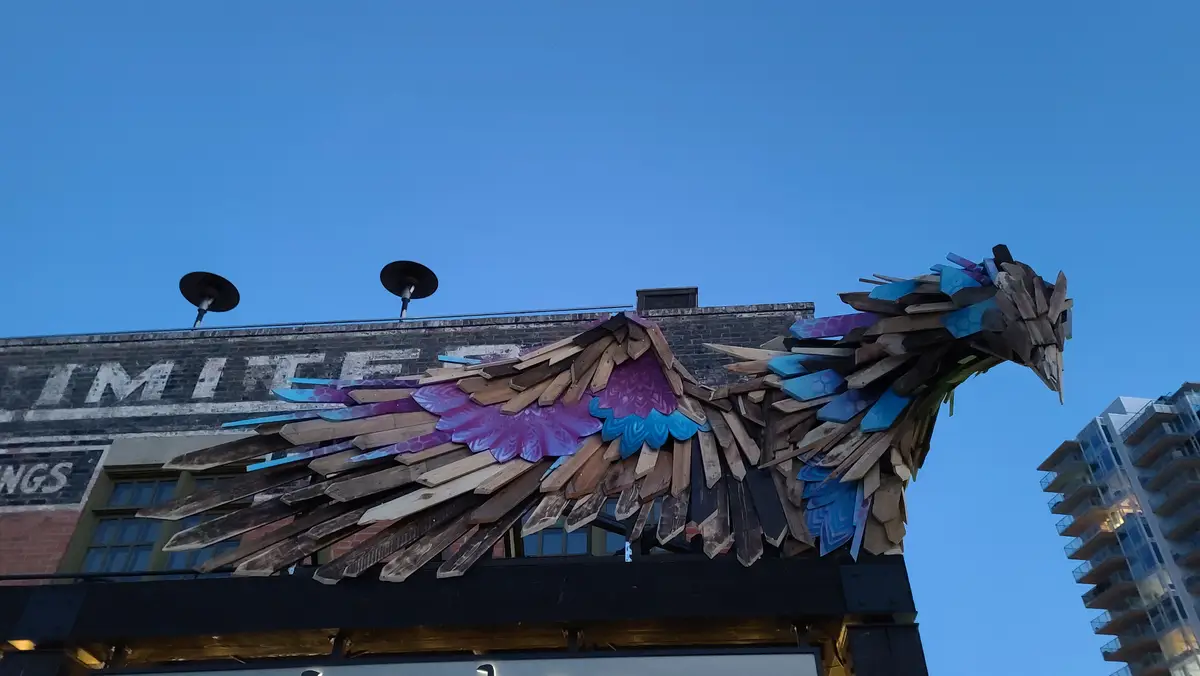
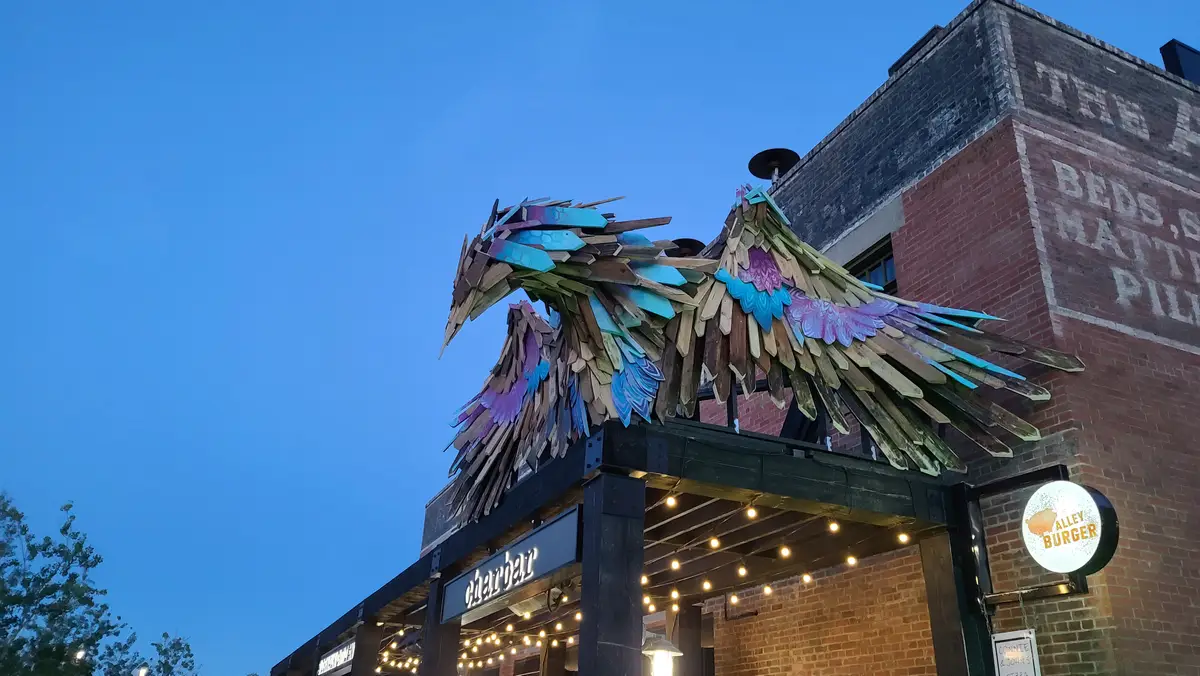
It is not hard to see the continuity. Brown's work moves fluidly between the intimate scale of skin, the objecthood of prints and paintings, and the public scale of installation. Across all of it, the same values recur: structure, experimentation, longevity, and the effort to make something that reads immediately without collapsing into novelty.
What is Aaron Brown working on next?
Looking ahead, Brown is expanding further. He has been painting more with the aim of building toward a possible solo exhibit. He is watching artist calls closely and wants to move further into murals and public installations outside the festival circuit. He is also developing an app intended to help artists refine their skills. That project is still early, but it fits the larger pattern. Brown is interested in tools, but only when they deepen the work rather than replace the hard part of making it.
That makes him a natural fit for the WinPrint monthly artist series that shares in his interest to bring the digital back into the physical space.
What stands out in Brown's practice is not just versatility. It is the fact that every expansion in medium still seems tied to the same internal standard. He is not chasing novelty for its own sake. He is still following the question that emerged after that first basement tattoo and the quiet disappointment of a mentor's single-word response. What is the right way to do this? What holds up over time? What actually belongs to the artist, and what has only been borrowed?
Those questions have given his work both discipline and range. And they are part of what makes Aaron Brown compelling now: an artist grounded enough to respect the old rules, and restless enough to keep testing where they can go.
The Edition
Breathe — five numbered canvases
Built digitally, then hand-finished by Brown with painted white highlights — so no two of the five are identical. Printed and hand-stretched on cedar bars in Winlaw.
One of the five is given away in the monthly draw. The rest are offered for sale.
- Edition
- 5 numbered canvases
- Given away
- 1 of 5, by draw
- Finish
- Hand-painted highlights, each unique
- Featured
- March 2026
Find Aaron Brown
Questions about Aaron Brown
What is Breathe by Aaron Brown?
Breathe is a digital composition produced as a WinPrint canvas edition. Brown hand-finishes the canvases with painted white highlights, making each one distinct.
What is Aaron Brown’s SOAR installation?
SOAR is a site-specific bird installation created for the pergola above the Charbar patio at Calgary’s Simmons Building.
Find the artist
Aaron Brown’s website · @AaronBrownTattoos on Instagram · Aaron Brown’s WinPrint artist profile
Explore the current Artist Series
WinPrint’s Artist Series produces signed, numbered canvas editions of five. One canvas from each edition is offered through a free public draw.
See the current drawExplore this artist’s collection